What the Oak Kept
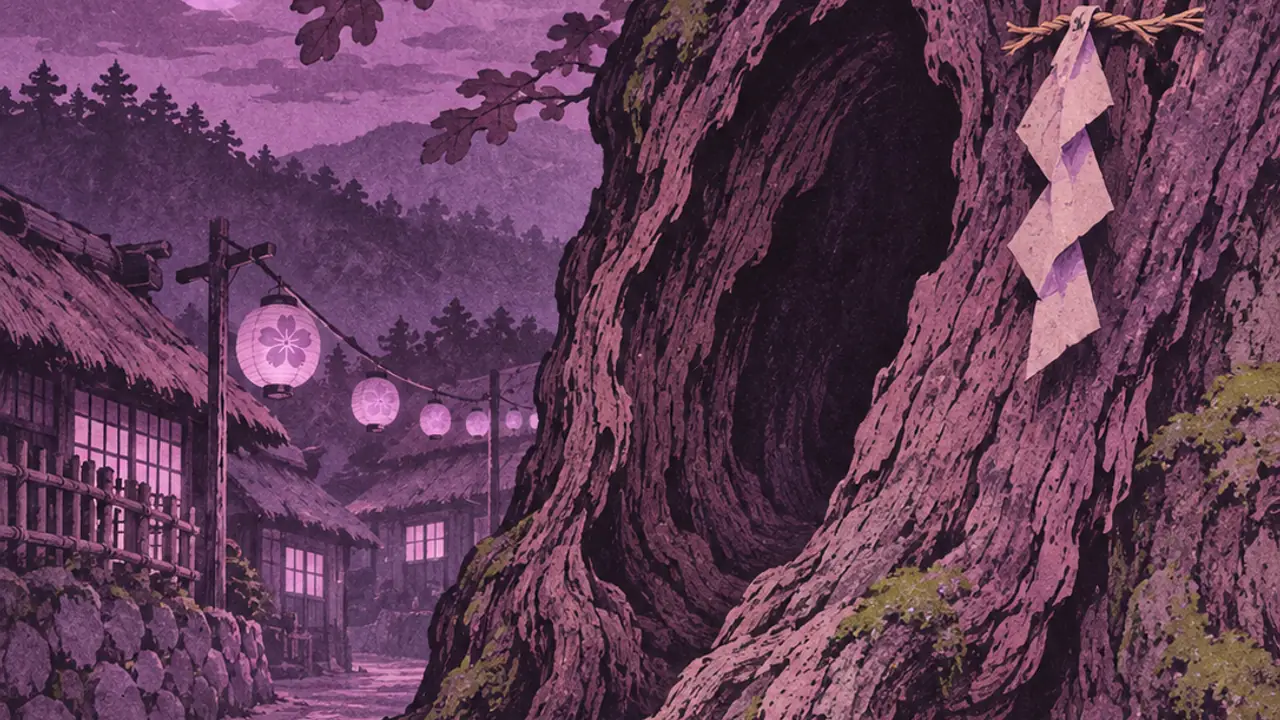
What the Oak Kept is a folk-kaidan game concept about following two objects through a village before dusk. One is a folded festival strip caught in the tree. A shard of green pottery is delivered to a covered stall. A rumor links them after the first witness has gone. The investigator can record both objects independently and use their locations to decide where to look for a stronger connection.
Object record: folded strip
The strip can be studied on the bark without taking it. On the first view the investigator can read its shape and see how it is folded. Its other side is hidden. A witness says they carried a similar strip to the field gate. The statement does not establish that they touched the strip on the tree. Record the shape as an observation and the trip as a separate account, then compare whether the village used more than one such strip that day.
Object record: pottery shard
At the stall, ask who brought the shard and which street they came down. A vendor saw it put on the table. The person who carried it may know where it first changed hands. The investigator can seek that person or return to the tree to compare the object with a mark in the ground. Each visit adds a distinct kind of information. The game should let the player explain which fact is known even when the link remains uncertain.
Follow the chain without writing its conclusion first
Start with a place, check the object and choose whom to ask about its last known movement. The ledger can show an observed action with a full line and a reported action with an open line. The lines should be readable by their text labels as well. A date or place may be left unknown until the investigation supplies it. Revisiting a witness after an object is found can add a new detail without silently replacing the earlier version.
The first chapter builds only a short chain. An observed change in locations can support a plausible question, and a plausible question can be useful without becoming a finding. The player chooses what to write in a short return note at the square. Let them note disagreement rather than force both objects to fit a single explanation. A case resolves when the remaining claims and gaps can be described clearly, even if it leaves the village’s rumor in circulation.
Drawing the object at two scales
Begin by identifying the same bark mark from each distance.
The large view gives the oak a pale bark pattern and the shard a small green edge. The square shows where the same tree sits relative to the stalls. The route uses broad mauve surfaces and keeps transitions legible in a static view. This is an early concept. The prototype will test whether players keep observed and reported movements separate while navigating between the two distances. The Unlit Procession tests a related question about who could see a custom being followed. Both briefs appear in Testimonies.